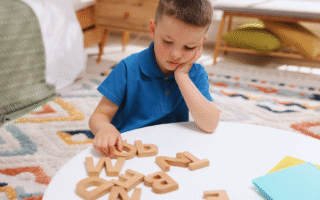

Games play a significant role in child development, influencing various skills that are crucial for a child’s growth. Certain games can enhance cognitive development, improve attention spans, and support social skills, making them essential tools in early childhood education. Engaging in play allows children to explore their environments, think critically, and interact with others, all of which contribute to their overall development.
From board games that encourage strategic thinking to cooperative video games that foster teamwork, the variety is vast. Children benefit from both structured and unstructured play, as each type serves different needs in developing essential life skills. The right games not only entertain but also provide valuable learning experiences that shape a child’s future.
Understanding which games are beneficial can empower parents and educators to make informed choices. By selecting appropriate activities, they can ensure that children are not only having fun but also cultivating the skills necessary for lifelong learning and social interaction.
The Role of Play in Cognitive and Motor Skills Development
Play is essential for children’s growth, significantly impacting both cognitive and motor skills. Engaging in various play activities nurtures abilities that contribute to overall development, essential for future learning and physical coordination.
Enhancing Fine and Gross Motor Skills
Fine motor skills involve precise movements, while gross motor skills encompass larger actions. Engaging in play activities like building blocks aids in developing fine motor skills as children manipulate small pieces to construct various structures.
Jigsaw puzzles also support fine motor development by requiring children to grasp, turn, and fit pieces together. Through outdoor play involving hopscotch or climbing, children enhance their gross motor skills, improving balance, coordination, and strength. Active play encourages movement, providing opportunities for children to gain confidence in their physical abilities.
Stimulating Cognitive Skills through Play
Play is not solely physical; it enhances cognitive skills as well. Through imaginative play, children explore scenarios, enhancing their creativity and problem-solving abilities. Role-playing can stimulate language development and social skills as children communicate and collaborate with peers.
Games involving strategy, like board games or memory games, challenge cognitive processing and critical thinking. These activities foster skills such as memory, attention, and decision-making. Regular engagement in varied play activities lays a strong foundation for academic learning and adaptive skills required in everyday life.
Educational Games and Activities for Growing Minds
Engaging children with educational games can significantly enhance their cognitive skills. Through various activities, they can develop essential abilities such as problem-solving, memory retention, and attention span.
Learning through Puzzles and Problem-Solving Activities
Puzzles serve as a fundamental tool for improving a child’s cognitive skills. They encourage pattern recognition, enhance visual memory, and foster an understanding of spatial relationships. Activities like jigsaw puzzles or logic puzzles push children to think critically.
Incorporating scavenger hunts can also be beneficial. Children search for items based on clues, which helps improve reasoning skills and concentration. These activities are not only enjoyable but also provide a practical approach to learning.
Worksheets can complement puzzle activities by reinforcing concepts through practice. Games that involve matching or sorting objects can further develop attention spans and memory, ensuring that learning is both effective and entertaining.
Innovative Learning with Interactive and Animated Games
Interactive and animated games are excellent for capturing children’s attention. Platforms like SplashLearn offer engaging visuals and sounds, making learning fun and interactive. These games can cover various subjects, from maths to language skills.
Such educational games often adapt to a child’s learning pace, appealing to individual strengths and weaknesses. This adaptability helps in reinforcing concepts without causing frustration.
Animated storytelling games promote creativity while enhancing memory through narrative-based challenges. Children are encouraged to recall details, which boosts their retention abilities. Thus, these games offer innovative avenues for learning essential skills in an enjoyable format.
Developmental Benefits of Structured and Unstructured Play
Both structured and unstructured play offers significant benefits for child development, particularly in areas such as social skills and independent thought. Engaging in various games and activities provides opportunities to enhance cooperation, creativity, and critical thinking.
Cultivating Social Skills and Teamwork
Structured games like Simon Says and Hide-and-Seek encourages children to interact and take turns, essential elements in developing social skills. These activities teach children how to communicate effectively, understand others’ feelings, and resolve conflicts collaboratively.
Unstructured play, such as imaginative games or team sports, fosters teamwork by requiring children to work together towards a common goal. This collaboration stimulates their ability to negotiate roles and responsibilities within a group. As they experience both types of play, children learn to appreciate diversity in perspectives and develop empathy, further enhancing their social competency.
Promoting Independent Thought and Creativity
Unstructured play is crucial for encouraging independent thought and creativity. Activities like I Spy with My Little Eye or Odd One Out challenge children to think critically and use logical reasoning to solve problems. They experiment, make choices, and express their ideas freely without predefined rules dictating their actions.
Structured play can also boost creativity when it incorporates decision-making elements. For instance, games that allow children to create their own rules or modify existing ones prompt them to think innovatively. Overall, both forms of play provide fertile ground for developing cognitive and imaginative skills that are essential for lifelong learning.
Guiding Healthy Development Through Appropriate Screen Time and Physical Activities
To support child development effectively, it is crucial to balance screen time with physical activities that promote sensory engagement and learning. This approach fosters cognitive skills while enhancing language development and perception.
Balancing Screen Time with Active, Sensory Play
The American Academy of Pediatrics recommends that screen time for children aged 2 to 5 should not exceed one hour per day. Activities should be engaging and interactive, promoting both learning and fun.
Incorporating physical play, such as running, jumping, and climbing, encourages children to explore their environment. Active play helps develop motor skills, enhances object permanence, and stimulates cognitive growth.
It’s important for caregivers to participate in play. Joint activities not only strengthen bonds but also provide opportunities for children to verbalise their thoughts, enhancing language skills. Creating a routine that alternates between screen time and physical activity ensures a balanced approach to development.
Encouraging Language Development and Perception
Engaging in activities that spark conversation is crucial for language development. Interactive games that require verbal communication aid in vocabulary expansion and comprehension.
Activities like storytelling, where children can express ideas and ask questions, enhance perception and cognitive abilities. Observational play, such as scavenger hunts, helps in recognising patterns and fosters critical thinking.
Using sensory play materials like sand, water, and clay promotes exploration and creativity. These activities stimulate various senses, encouraging children to describe their experiences, thereby developing their language skills. Incorporating these elements can create a rich learning environment that supports overall development.